
Human vs AI Voice-Over India 2026: What’s Right for Your Brand?
July 18, 2026
Subtitles vs Dubbing for a Global Audience: Which One Should You Choose
August 10, 2026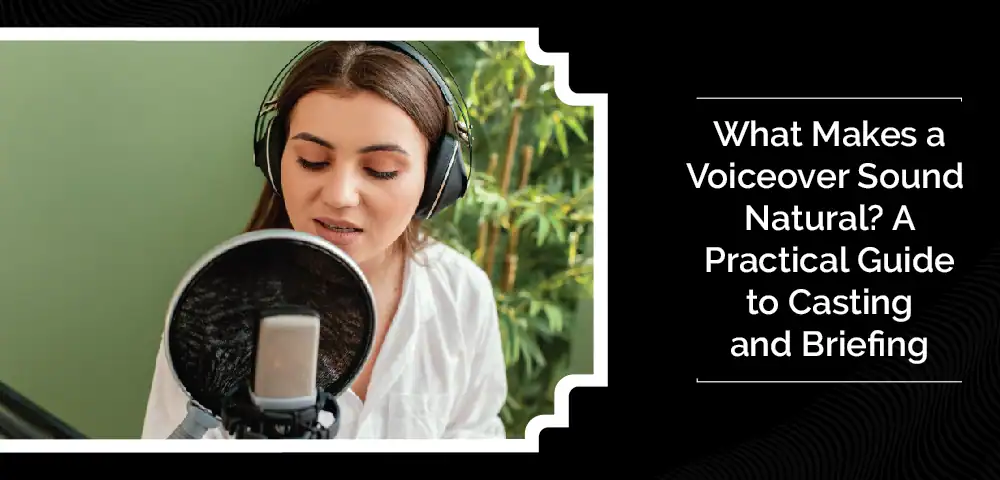
Every producer has said it at some point: “I just want it to sound natural.” It is one of the most common briefs in voice-over and also one of the least useful on its own. Natural means something different depending on the content, the audience, and the platform. Getting it right is not a matter of finding someone with a pleasant voice and pointing them at a script. It takes deliberate casting, a well-structured voice-over casting brief, and a clear understanding of what “natural” actually means for the specific project at hand. This blog breaks all of that down practically, so the next session starts in the right place.
A] What Do Producers Actually Mean When They Say “Sound Natural”?
The word ‘natural’ gets used as a catch-all in voice-over briefs, but when you press most producers on what they actually mean, three things tend to come up consistently.
The first is conversational rhythm, a delivery that moves the way people actually speak rather than the way a script reads on the page. The second is emotional restraint, not performing the feeling but letting it come through in the phrasing and pace. The third is authentic delivery, the sense that the artist genuinely means what they are saying rather than announcing it.
What makes a skill natural rather than a default is that it requires the artist to actively undo trained theatrical instincts and find a register that feels unforced. It also shifts depending on context. What sounds natural in a voice-over artist for documentary narration is very different from what sounds natural in a social media ad or a corporate training module. The audience and platform define the target, and the brief should reflect that clearly.
B] Does Casting Do More Work Than Direction Ever Can?
The honest answer is yes, most of the time. The right voice for a project is identified before the session begins, not rescued during it. No amount of direction in the booth will fully correct a fundamental mismatch between the voice and the tone the content needs.
There is a meaningful difference between conversational artists and theatrical artists. Conversational artists have a natural intimacy in their delivery, a quality that makes the listener feel like they are being spoken to rather than spoken at. Theatrical artists have range and power, but can sound effortful in content that calls for restraint. Matching the artist to the job is the most important casting decision, and it is one that no brief or direction can override once the wrong choice has been made.
When casting and tone are misaligned, the session takes longer, the revisions multiply, and the final recording often still does not feel right even when every technical note has been addressed. Curated shortlists tailored to the project’s specific needs consistently outperform sending a client hundreds of demos to scroll through and self-select from. The former saves time. The latter creates noise.
C] What Should a Voice-Over Casting Brief Actually Include?
A well-written voice-over casting brief is the single most valuable thing a producer can bring to a voice-over session. Most briefs are too short, too vague, or focused on the wrong details. Here is what should always be in one.
1. Who the Audience Is
This is the most important detail in any brief and the one most commonly left out. A voice-over artist for corporate films and videos pitching to senior decision-makers needs a different register from one speaking to frontline staff in a training module. Age, background, familiarity with the subject, and the relationship the brand wants to have with that audience all shape how the voice should sound. Without this information, the artist is guessing.
2. A Tone Reference
A short clip, even thirty seconds of a previous campaign, a competitor’s ad, or a piece of content with the right energy, is worth more than a full page of adjectives. Words like warm, authoritative, conversational, and confident mean different things to different people. A reference anchors everyone in the session to the same target and removes ambiguity before the first take.
3. Platform and Context
A voice-over for a social media ad, a broadcast television spot, and an internal training video are three entirely different jobs, even if the script is identical. The platform shapes the expected delivery style, the pacing, and the level of intimacy in the voice. A voice-over artist for advertising and commercials knows this instinctively, but the brief should make it explicit so there is no confusion about what the final recording needs to do.
4. Pronunciation, Brand Names, and Technical Terms
This small detail causes the biggest delays in sessions. Indian brand names, product names, city names, and technical terminology need to be listed in the brief with phonetic guidance where there is any ambiguity. A recording that goes back for a re-record because a brand name was mispronounced is a preventable problem, and it is one that a clear brief eliminates.
5. A Simple Checklist Before Every Session
Before the session begins, confirm the following: the audience has been defined, a tone reference has been shared, the platform and context are clear, all brand names and technical terms have been listed with correct pronunciations, and the script has been reviewed for lines that may not read naturally when spoken aloud. Running through this list takes five minutes and saves considerably more than that in the session itself.
D] Why Do Audiences Respond Better to Natural-Sounding Voice-Over?
Listener fatigue with over-produced, theatrical delivery has increased significantly as audiences have grown more accustomed to conversational media formats. Podcasts, documentary content, and direct-to-camera video have all shifted expectations around what a trustworthy, engaging voice sounds like. A delivery that would have sounded polished and professional a decade ago can now read as stiff or performative to the same audience.
A conversational tone feels more credible to modern audiences because it mirrors the way they actually consume information in their daily lives. It does not announce itself. It simply communicates. A grounded voice also fits contemporary production styles more naturally, sitting comfortably alongside clean visuals and minimal music rather than competing with them.
That said, “natural” is not always the right call. A voice-over artist for audiobooks needs a different kind of expressiveness to sustain a listener across hours of audio. High-energy advertising sometimes calls for a more heightened delivery. The goal is always to match the voice to what the content and audience actually need, not to default to conversational simply because it feels safe.
E] What Separates a Good Voice-Over Performance From a Great One?
1. Reading a Script vs Owning It
The difference between reading a script and owning it is something that is immediately felt by the listener, even when they cannot articulate what they are responding to. A good performance hits all the technical marks. A great one makes the script disappear entirely, leaving only the message and the feeling it was meant to create.
2. How Pacing, Pause, and Emphasis Create Believability
Pacing, pause, and emphasis are the three tools that create believability. A well-placed pause gives the listener time to absorb what has just been said. Emphasis that lands on the right word shapes meaning without effort. Pacing that follows the emotional logic of the script rather than its word count keeps the delivery feeling alive rather than metronomic.
3. Why the Best Performances Feel Effortless
The best performances feel effortless, but they are the result of significant preparation and instinctive craft built over years of experience in the industry. That ease of delivery is not something that can be rushed or coached into existence in a single session. It comes from a deep familiarity with how language works when it is spoken rather than read.
4. What Producers Can Do to Bring Out the Best in a Session
Producers can bring out the best in a session by sharing context generously, giving specific feedback rather than general notes, and trusting the artist to interpret rather than just execute. Working with a professional voice-over artist in India who understands both the craft and the brief is what turns a good recording into one that genuinely works.
Conclusion
A natural-sounding voice-over is not an accident. It is the result of deliberate casting, a clear and detailed brief, and a genuine understanding of what the audience needs to feel. Get those three things right before the session begins, and the recording almost takes care of itself. Get them wrong, and no amount of direction in the booth will fully correct it. The investment in preparation is always smaller than the cost of a recording that does not land the way it should.
Peter Abraham has delivered thousands of voice-over projects across India and internationally, from IVR systems and e-learning modules to national television commercials and full-length documentaries, for clients including Amazon, Airtel, BBC, and Lenovo. He is also a Netflix India-certified dubbing artist, having lent his voice to several theatrical releases and OTT shows across popular platforms like Netflix, Prime Video, Crunchyroll, and more. If you have a project in mind and want to know exactly what it will cost, get in touch and get a tailored quote for your specific requirements.
(Please note, all voice-over recordings are conducted remotely in professional-grade studios. This approach ensures top-quality sound and allows talented artists to deliver exceptional performance. Advanced remote recording technology provides seamless communication and studio-quality results regardless of location.)

Peter Abraham
Peter Abraham is a versatile voice-over artist based in Mumbai working in the voiceover industry since 2009. With a passion for storytelling and meticulous attention to detail in every project, he brings scripts to life with his captivating voice and professional delivery, exceeding client expectations. Whether it's a commercial or an audiobook, Peter specializes in a wide range of voice-over work, ensuring the highest quality.