
Subtitles vs Dubbing for a Global Audience: Which One Should You Choose
August 10, 2026
Why Micro Dramas Are Popular in 2026 and How Micro Series Dubbing Is Scaling Them Globally
September 21, 2026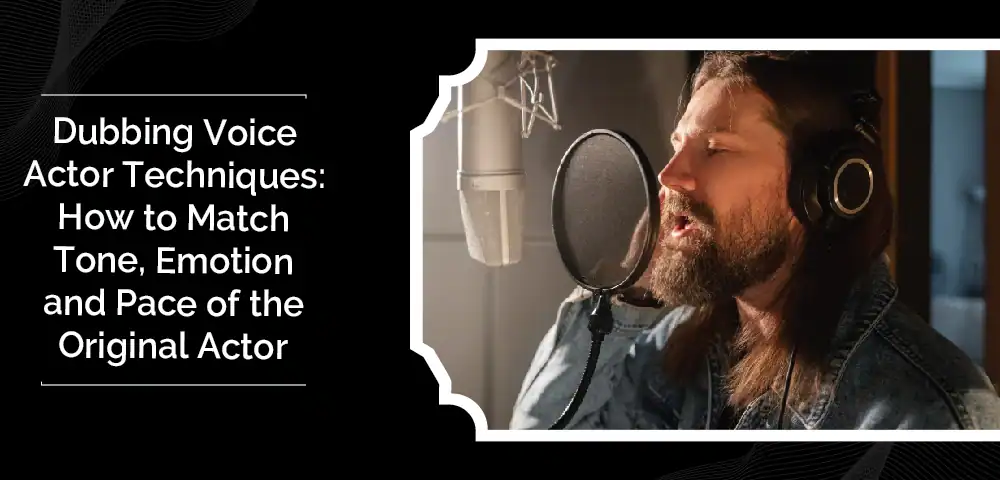
Dubbing is one of the most demanding disciplines in voice-over work, and the hardest part is not the lip-sync. It is making the character feel like themselves in a language they were never written in. That requires something more specific than a strong performance. It requires voice matching in dubbing, the ability to read what the original actor was communicating, and delivering that same emotional truth through a completely different phonetic structure. This blog breaks down exactly how that works, from reading the original performance correctly to resolving the tension between lip-sync and emotional truth.
A] What Is Voice Matching in Dubbing and Why Does It Matter?
Voice matching is the practice of replicating the tone, emotion, pace, and character essence of the original actor’s performance in a new language. Voice matching is not acoustic imitation. The goal is not to sound like the original actor. The goal is emotional equivalence, delivering the same feeling, the same character energy, and the same dramatic intention through the vocal conventions of a different language.
This distinction matters because a technically accurate imitation that misses the emotional register will break viewer immersion just as effectively as poor lip-sync. The audience may not consciously register what is wrong. They will feel it.
The stakes also differ across formats. A tonal mismatch in a feature film can affect the two-hour experience. In OTT series, it compounds across episodes. In an audiobook, it erodes the listener’s trust in the narrator across hours of content. The format changes the scale of the problem but not its nature. Understanding how to match voice tone in dubbing is what separates a competent dub from one that genuinely serves the content, regardless of what that content is or where it will be heard.
B] Reading the Original Performance Before You Record
The most important thing a dubbing voice actor can do before recording is watch the full scene, not just read the script. The script tells you what the character says. The performance tells you who they are.
When watching, study these things. The actor’s emotional default state, the baseline they return to between dramatic moments. Their use of silence and pause, where they hold back and where they let the emotion sit. Their energy arc across the scene, how it builds or drops in response to the drama. And the social and cultural markers in the performance, the class, authority, vulnerability, or age being communicated through their delivery choices.
Missing any of these produces a dub that is wrong not just for one line but for every scene the character appears in. The reading stage is where the performance is built. The recording session is where it is executed. This is the foundation of voice acting techniques for accurate character dubbing that holds up across the full length of a production.
C] The Core Techniques for Matching Tone, Emotion and Pace
1. Tone Matching for Dubbing Artists: Finding the Register, Not Copying the Sound
Tone matching begins with identifying the emotional register of the original and finding how that register expresses itself naturally in the target language. Direct tonal imitation across languages rarely works because the same emotional quality sounds different depending on the phonetic and rhythmic characteristics of the language being spoken.
The approach that works is to internalise what the original actor is communicating emotionally and express that same quality through the target language’s own rhythms and conventions rather than forcing the source language’s delivery patterns onto a different phonetic structure. Tonal equivalence, delivering the same emotional quality rather than imitating the same sound, is where the craft of voice matching actually lives and what separates a dubbed performance that feels native from one that feels translated.
2. Emotion Matching in Voice Dubbing: Inhabiting Rather Than Performing
There is a meaningful difference between performing an emotion and inhabiting it. Performed emotion announces itself. Inhabited emotion communicates through micro-details of delivery that the audience feels without identifying it.
Those micro-details are breath placement, where a character breathes and how deeply; vocal hesitations that signal internal conflict; and volume modulation that rises and falls with the emotional stakes of the scene. These are what make a dubbing performance feel real rather than reconstructed, and they are at the heart of how to preserve emotional tone in dubbed voice acting across an entire production.
3. Voice-Over Pacing Techniques: Rhythm Without Mechanics
Pace matching requires the artist to match the original actor’s speech rhythm within lip-sync constraints while delivering naturally in a different language. The approach is to work with the emotional logic of the pacing rather than mechanically replicating the timing.
An actor who slows down in the original is doing so for a reason: to give a word more weight, to let a moment land, to signal a shift in the character’s internal state. Understanding why the pace changes is what allows a dubbing artist to honour that choice in the target language. When the original uses silence deliberately, that silence must be respected in the dubbed performance.
4. Energy Calibration: Matching Without Over-Performing
Energy calibration is matching the original actor’s projected energy without over-performing to compensate for the language difference or under-delivering because lip-sync constraints have flattened the performance. The goal is to find the level of energy that feels native to the character in the target language, which sometimes means delivering slightly less than the original to account for how energy reads differently across languages and cultural contexts.
D] Lip-Sync and Emotional Truth: Balancing Both Without Sacrificing Either
Lip-sync and emotional truth are frequently in tension, and how a voice-over artist in India resolves that tension is one of the clearest markers of professional craft.
The common mistake is letting lip-sync pressure take over, prioritising consonant matching at the expense of the emotional performance. The result is a technically accurate dub where the words match the mouth, but the character has disappeared.
The fix is to prioritise emotional peaks over perfect consonant matching. Hard consonants at the beginning of words are more visible than soft ones in the middle, and breath points often offer more flexibility than they appear to. Tips for matching lip-sync and emotion in dubbing always start there. Moreover, the dubbing director plays a significant role here. A good director pushes for emotional truth first and works the technical sync around it rather than the other way around.
E] Common Voice Matching Mistakes and How to Fix Them
1. Imitating Pitch Instead of Matching Emotional Quality
Pitch is a surface characteristic. Emotional quality is what the audience responds to. Stop listening to how the original actor sounds and start listening to what they are communicating. Then find how that expresses itself most naturally in your own voice in the target language. This is the core of how to sound like the original actor in dubbing without losing your own delivery instinct in the process.
2. Over-Performing to Compensate for Language Difference
When a dubbing artist feels the gap between their performance and the original, the instinctive response is to push harder emotionally. This almost always makes it worse. Overperformed emotion reads as theatrical rather than real. Pull back, trust the micro-details, and let the emotional truth communicate itself quietly.
3. Ignoring the Character’s Emotional Default State
Playing only the peaks while ignoring the baseline creates a performance that feels inconsistent. Every character has an emotional default they return to between dramatic moments. Getting the baseline right is what makes the peaks land with the right contrast. This applies across all formats, from voice-over for documentary narration to a multi-character OTT series where several characters share scenes.
4. Letting Lip-Sync Pressure Flatten the Performance
When technical demands take over, the performance flattens, and the character disappears. Record the emotional performance first without worrying about sync, then work the technical adjustments around a performance that already has its own truth. This approach is especially important for voice-over artists for advertising and commercial dubbing work where the emotional beat of a 30-second spot has no room to recover from a flattened delivery.
5. Failing to Maintain Voice Consistency Across Sessions
A character who sounds slightly different in session three than in session one creates a subtle but damaging inconsistency in the final dub. Record a short reference take at the start of every session and listen back to early recordings before beginning new work. Professional voice-over services for long-form dubbing projects, including voice-over artists for audiobooks and corporate films and video productions, build this consistency checking into the workflow as standard.
Conclusion
Voice matching in dubbing comes down to one goal: making the audience forget they are watching a dubbed performance. That happens when the emotional truth of the original is preserved in the new language, when the character feels like themselves regardless of what language they are speaking, and when the technical demands of lip-sync have been resolved without flattening the performance that carries everything else. The dubbing voice actor techniques covered here are the foundation; the craft comes from applying them consistently across every scene, every session, and every character until they become instinctive.
Peter Abraham is one of India’s most trusted professional voice artists, with experience across thousands of projects in advertising, broadcasting, digital media, and corporate communication. His voice has been featured in IVR systems, e-learning content, television commercials, documentaries, and branded campaigns for renowned names including Amazon, Airtel, BBC, and Lenovo. As a certified Netflix India dubbing artist, he has also contributed to theatrical films and OTT content on platforms such as Netflix, Prime Video, Crunchyroll, and more. Planning a voice-over project? Get in touch for a customised quote based on your script, usage, and production requirements.
(Please note that all voice-over recordings are conducted remotely in professional-grade studios. This approach ensures top-quality sound and allows talented artists to deliver exceptional performance. Advanced remote recording technology provides seamless communication and studio-quality results regardless of location.)

Peter Abraham
Peter Abraham is a versatile voice-over artist based in Mumbai working in the voiceover industry since 2009. With a passion for storytelling and meticulous attention to detail in every project, he brings scripts to life with his captivating voice and professional delivery, exceeding client expectations. Whether it's a commercial or an audiobook, Peter specializes in a wide range of voice-over work, ensuring the highest quality.