

How Indian English Voice-Over for Global Clients Is Shaping Worldwide Projects
April 29, 2026
Everything You Need to Know About Narration vs Voiceover Before Your Next Production
June 11, 2026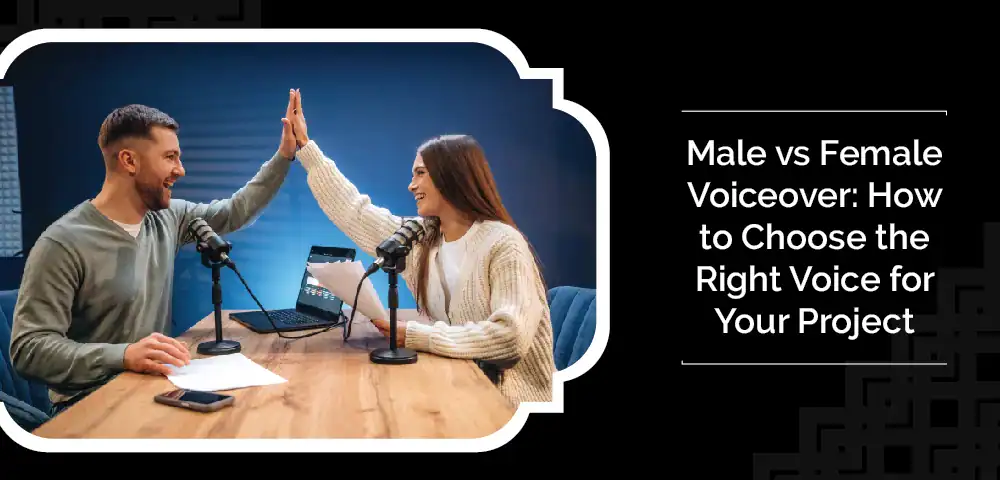
Every great piece of content has a voice behind it. Sometimes it is warm and conversational, sometimes authoritative and direct, but it always plays a bigger role in how the audience receives the message than most people give it credit for. One of the most common questions that comes up during production is whether to go with a male or a female voiceover artist, and it is a question worth thinking through carefully. The right voice can shape how an audience feels about a brand or a message before a single word has fully registered. This blog breaks down the key factors that should guide that decision, from audience psychology and content type to brand identity and practical casting tips.
A] Understanding Male vs Female Voiceover Perception
Audiences bring a set of associations to every voice they hear. Research consistently shows that male and female voices tend to trigger different psychological responses, and these responses influence how listeners engage with content.
Male voices are often perceived as authoritative and trustworthy in a formal sense, making them effective in content where credibility is the primary goal. Female voices are frequently associated with warmth and emotional connection, which makes them highly effective in content that needs to build a connection with the listeners.
This is not an exact rule, but rather a perception shaped by culture and media; it depends on the geographical location and even on particular target markets. What matters is that they can influence engagement and trust, thus becoming relevant factors when casting voiceovers.
B] Choosing the Right Voice Based on Audience and Content
Know Your Audience First
The most important factor in this decision is understanding who you are speaking to. Audience demographics, including age, gender, cultural background, and familiarity with the subject matter, all influence how a voice will land. A voiceover that resonates with one audience segment may feel completely off to another, so this is always the right place to start.
Matching Voice to Content Type
Different content formats tend to favour different voice styles. Corporate films and formal narration have traditionally leaned towards male voices, though this has shifted in recent years. E-learning content benefits from voices that feel approachable and patient. Advertising and digital content are increasingly open to both, with script tone and brand personality playing a bigger role than gender alone.
The India-Specific Angle
In the Indian context, casting decisions are also shaped by regional and cultural nuances. Categories like financial products, government communications, and healthcare tend to gravitate towards male voices for perceived authority. Personal care, education, and lifestyle content frequently feature female voices for their warmth and relatability. Working with an experienced Indian voiceover artist who understands these nuances can make a meaningful difference to how the content is received.
Context Over Gender
Context has a more significant impact than gender. A perfectly cast voice, one that reflects the context of the project, will consistently outperform an off-context voice, irrespective of whether the voice is masculine or feminine.
C] Voiceover Selection Based on Brand and Marketing Goals
Aligning Voice with Brand Identity
A voiceover is an extension of a brand’s personality. Before making a casting decision, it helps to be clear about what the brand sounds like. Is it authoritative or approachable? Premium or accessible? Energetic or calm? The voice should reflect those qualities naturally rather than feel like a separate element added on top of the content.
Tone and Delivery Style Are the Real Differentiators
Once brand identity is clear, tone and delivery style matter far more than gender. A male voice with a warm, conversational delivery can be just as emotionally engaging as a female voice in the same register, and the reverse is equally true. In dealing with the issue of choosing a voiceover artist in India, the main issue should be to consider what combination of vocal style is appropriate for the particular assignment, not whether males or females are employed.
Test Before You Commit
Brands that test different voice options before finalising a choice consistently report better outcomes. Remaining open-minded about gender when casting and allowing the context of the script and the needs of the audience to direct the selection is more likely to yield better outcomes for engagement, memorability, and conversions.
D] Practical Advice on Selecting Between Male and Female Voiceover
Listen to Multiple Samples
Begin your practice by listening to voice samples from a wide array of male and female artists. What’s important is not only what their voices sound like, but also how they make you feel. Emotional response is a reliable early indicator of fit.
Test Against Your Actual Script
A voice that sounds great in isolation may not suit your specific content. Request a short read from shortlisted artists using your actual copy. Hearing the voice in context removes a lot of the guesswork.
Let the Script Tone Guide You
A warm, conversational script calls for a different voice than a formal, instructional one. Rather than starting with a gender preference, start with the tone and purpose of the content and let that narrow the options naturally.
Work with Professionals
The professional ensures that the recording is delivered on time, of high quality, and consistent. Regardless of whether you require a male voice-over artist from India or a female one, working with a professional greatly improves the outcome.
Avoid Defaulting to Stereotypes
The most common mistake in voiceover casting is making a gender decision based on assumption rather than evidence. Let the brief, the audience, and the brand identity drive the choice.
Conclusion
There is no single right answer to the male vs female voiceover question, and that is actually useful. It means the decision can always be made in service of the project rather than out of habit or assumption. The factors that matter the most are the audience being addressed, the personality of the brand, and the tone the content needs to carry.
Working with a leading voice-over artist in India, like Peter Abraham, can help your brand connect more with the audience. The principle is the same. Priorities fit over assumption, and the right voice will make itself known.
A professional Indian voice-over artist with over 15 years of experience, Peter Abraham has worked with leading global brands including Amazon, Airtel, BBC, and Lenovo, among others. If you are looking for a voice that brings clarity, credibility, and the right tone to your project, get in touch today.
(* All voice-over recordings are conducted remotely in professional-grade studios. This approach ensures top-quality sound and allows talented artists to deliver exceptional performance. Advanced remote recording technology provides seamless communication and studio-quality results regardless of location.)
Frequently Asked Questions
Should I choose a male or female voiceover based on my target audience?
Audience demographics are one of the most important factors in this decision. Age, gender, cultural background, and subject familiarity all influence how a voice will be received. Starting with a clear picture of your audience makes every other casting decision easier.
What are the key differences in male vs female voice characteristics?
Male voices are generally associated with authority and formality. Whereas female voices tend to be perceived as warm and approachable. These are broad tendencies rather than fixed rules, and skilled voice artists of either gender can adapt their delivery to suit the needs of a specific project.
Does voiceover gender impact the emotional tone of my project?
It can, but delivery style and tone matter just as much. A warm male voice can be just as emotionally engaging as a female voice in the same register. The goal is finding the right combination of vocal quality and delivery for your content, not defaulting to gender as a shortcut.
When does gender not matter in voiceover selection?
When script tone, brand personality, and audience fit are all aligned, gender becomes secondary. Well-directed, clearly written content delivered with skill will connect with its audience regardless of whether the voice is male or female.
How do I decide male vs female for specific project types?
Start with the tone and purpose of the content, layer in audience demographics, and align both with your brand identity. Testing a short read from shortlisted artists using your actual script is the most reliable way to arrive at a confident final decision.

Peter Abraham
Peter Abraham is a versatile voice-over artist based in Mumbai working in the voiceover industry since 2009. With a passion for storytelling and meticulous attention to detail in every project, he brings scripts to life with his captivating voice and professional delivery, exceeding client expectations. Whether it's a commercial or an audiobook, Peter specializes in a wide range of voice-over work, ensuring the highest quality.