Audio Dubbing: 5 Powerful Ways Voice Dubbing in Content Creation Enhances Impact
March 4, 2026
Best Free & Paid Audiobook Apps in India for Everyday Listening
March 30, 2026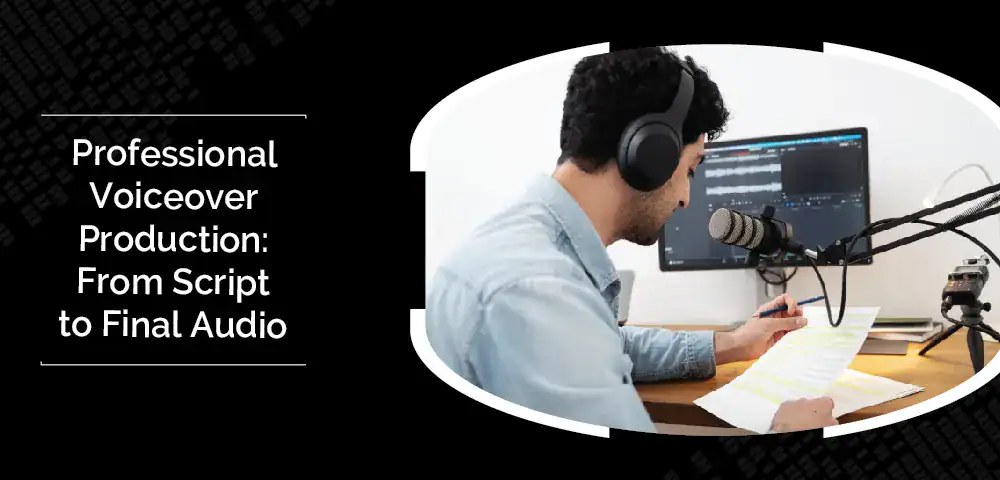
Have you ever listened to a voiceover and thought to yourself, “That sounds effortless”? Well, what you’re actually listening to is the result of a well-thought-out plan and expert work being carried out behind the scenes. From the initial draft of a script to the final product of a polished audio file, voiceover production is a very layered process that requires attention to detail at every step of the way. Whether it is a commercial, an e-learning module, or a corporate narration, the quality of the final output depends on how well each step is executed. Let’s walk through the complete voiceover production process and show you exactly what it takes to produce audio that truly connects.
Contents
A] Voiceover Script Preparation: Laying the Groundwork
A voiceover script is the first step in creating a voiceover. Preparing a voiceover script is not only about creating a script with good content; it is also about creating content with good voiceover qualities. A script that looks great on paper may not sound great when spoken out loud, which is something that a very skilled voiceover artist understands deeply.
The first thing is to understand the audience, the tone, and the goal of the script. Is the goal of the script to inform, persuade, or entertain? What feeling should the audience have at the end? These questions shape every word choice and sentence structure.
Scripts for voiceover must be structured for natural spoken delivery. Long sentences are cut into shorter ones. Contractions are used when appropriate to keep the informal tone. Pauses, emphasis points, and the pronunciation of certain words are indicated clearly so that the voice artist knows how to read the script. A final check of the script is always done before recording to ensure that there is no confusion in the directions, awkward wording, or errors. A well-prepared script will save time and help the project be a success.
B] Pre-Production Planning in the Voiceover Production Process
Pre-production is where creative direction takes shape. Before a single word is recorded, the project needs a clear plan. This stage of the voiceover production process defines what the final audio should sound like and how you can get there efficiently.
It begins with defining the project goals. What is the deliverable? Who is the end audience? What platform will the audio be used on? These answers directly influence every creative decision that follows. Selecting the right voice actor is an important consideration before shooting. The voice has to match the brand, the message, and the emotional tone of the content.
The recording style also needs to be selected at this stage. A commercial voiceover sounds very different from a corporate training narration or an audiobook. Timelines are mapped out, workflows are planned, and reference material such as brand guidelines, sample recordings, or tone references is prepared and shared with the voice artist. Good planning at the beginning will help avoid confusion at a later stage and ensure the project is kept on track and on time.
C] The Voiceover Recording Process: Getting Clean Audio
Voiceover recording is a combination of planning and performance.
1. Setting Up a Recording Space
To record your voiceover, you need a quiet space. This is because any level of noise can affect the quality of your recording.
2. Microphone Selection and Technical Setup
Microphone selection is a critical technical decision. Different microphones suit different voice types and recording styles. The technical setup, including preamps, audio interfaces, and monitoring equipment, must all be configured correctly before recording begins.
3. Vocal Warm-Ups and Performance Techniques
Before the session starts, vocal warm-ups help the voice artist prepare physically and mentally. Breathing exercises, tongue twisters, and a gentle read-through of the script help loosen the voice and sharpen focus.
4. Recording Multiple Takes for Quality Control
Multiple takes of each section are recorded so that the editor has various alternatives. Consistency in terms of tone, pace, and energy is monitored with utmost care.
With Peter Abraham, the recording is done with utmost precision and professionalism, making sure that each take is crisp enough to meet the requirements of the project. Check out the range of audio production services in Mumbai.
D] Voiceover Post-Production: Editing & Sound Enhancement
Voice-over post-production is the behind-the-scenes work that takes an untidy sound and turns it into one that is presentable and ready for air. It requires skill and an artistic sense of sound.
The first step involves cleaning the sound. This involves editing the mistakes, other breathing sounds, mouth sounds, and other background sounds carefully so that the sound does not lose its feel. After this, the rhythm is reviewed and edited if necessary. It is possible that the pause has to be edited out, and some of the dialogue has to be edited.
Equalisation makes the voice crisp, adding to the degree of clarity and warmth. Compression brings a sense of evenness in volume, adding a sleek, professional sheen to the voice. Balancing brings the voice into its proper position in the mix, even if music or sound effects are added. If necessary, background music and sound design elements are integrated in an organic way to support the voice without overpowering it. The result is audio that is clear, consistent, and ready for its intended platform. For professional voice-over post-production support, visit the audio production services in Mumbai page to see what is available.
E] Quality Control and Final Review
Quality control is the final and often underestimated stage of the complete voiceover production guide.
1. Conducting Final Listening Tests
Before any file is delivered, it goes through a thorough review process. Final listening tests are conducted from start to finish. It is not a casual skim; it is a careful and focused listening in an effort to pick up anything that has perhaps been missed in the editing process.
2. Cross-Device Audio Testing
In the testing phase, the audio is tested on various devices. This ensures that the consumer receives the audio in a consistent and clear form.
3. Verifying Pronunciation and Tone
In the verification phase, it is necessary to verify the pronunciation of the audio. This ensures that the pronunciation of the audio is consistent with the original script. This ensures that the tone of the voice used in the recording is consistent.
4. Preparation of Master Files for Distribution
Once all approvals have been received, master files in the desired formats are prepared for distribution. This commitment to quality at every step of the way is what makes good voice-over work great.
Conclusion
Professional voiceover production is not simply about hitting record. It is a disciplined, talent-driven process that begins with the first line of the script and does not end until the last audio file is ready to share with the world. Each stage, from voiceover script preparation to post-production and quality control, plays a vital role in shaping the quality of the finished product. When care and expertise pour into every detail, it is audio that speaks, evokes emotions, and remains with you. If you’re ready to bring your voiceover project to life, take a look at Peter Abraham’s services or contact Peter Abraham to start today. For those looking to improve their skills in voice acting, there are voice acting classes in Mumbai as well.
Peter Abraham, a premier voiceover artist in Mumbai, has delivered thousands of projects across advertising, corporate films, e-learning, and documentaries. His authentic voice connects brands with global audiences naturally. Get in touch with Peter Abraham today to start a voiceover process tailored to your business needs.
(*Please note that all voice-over recordings and voice dubbing are conducted remotely in professional-grade studios. This approach ensures top-quality sound and allows talented artists to deliver exceptional performances. Advanced remote recording technology provides seamless communication and studio-quality results regardless of location.)
FAQs
What are the key steps in the voiceover production workflow from script to final audio?
Voiceover script preparation, pre-production planning, voiceover recording with multiple takes, post-production editing (EQ, compression), and quality control with device tests ensure polished audio.
How long does a typical voiceover production process take?
A few days to a week: script prep and planning first, then recording, post-production editing, and final quality control in the voiceover production process.
What equipment and software are essential for voiceover recording and editing?
Microphones, preamps, and audio interfaces for voiceover recording; Adobe Audition/Pro Tools for editing, EQ, and compression in post-production. A quiet space is essential for a clean voiceover production process.
What are the common costs involved in voiceover production?
Scriptwriting, voice talent, studio time, editing, and music licensing add up based on project scope in voiceover production. Professional services streamline budgets effectively.
What mistakes should beginners avoid in voiceover workflows?
Skip no voiceover script preparation, noisy recording, unedited breaths, and rushed quality control. Match voice artist; warm up vocals. Try voice acting classes in Mumbai.

Peter Abraham
Peter Abraham is a versatile voice-over artist based in Mumbai working in the voiceover industry since 2009. With a passion for storytelling and meticulous attention to detail in every project, he brings scripts to life with his captivating voice and professional delivery, exceeding client expectations. Whether it's a commercial or an audiobook, Peter specializes in a wide range of voice-over work, ensuring the highest quality.