Voice Over vs Dubbing: Understanding the Real Difference in Audiovisual Content
January 27, 2026
Lip Sync Dubbing Techniques: A Complete Practical Guide
February 26, 2026
What gives the Spanish series “Money Heist” its true Spanish taste in Hindi, just like in Madrid? This is the power of flawless dubbing. Dubbing is an unsung art that localises global hits to become local legends by recreating each emotion, matching each lip movement, and each cultural nuance.
From Netflix series dominating the foreign market to video games immersing global players, dubbing eliminates the language barrier without the need for subtitles. The unseen secret to the global box office power of Hollywood, or the K-drama craze. For filmmakers and content creators collaborating with a voice-over artist in Mumbai, understanding that the dubbing process can turn regional interest into a global phenomenon is a must.
A] What Dubbing Achieves in Film, TV, and Games
Dubbing ensures that the audience experiences the emotional continuity of the characters, irrespective of the language they speak. It provides the audience with complete immersion; no subtitles hinder the audience from viewing the facial expressions and action scenes. For films, series, and games, dubbing delivers localised storytelling that resonates culturally while preserving the original creative vision.
In gaming, players experience rich narratives through dubbed dialogue during cutscenes and character interactions. TV series gain massive international followings when dubbing captures humour, tension, and relationships authentically. Films reach broader demographics without alienating non-English speakers. This seamless language bridge has a huge impact on market expansion and is thus essential for success in the global distribution of content.
B] How the Dubbing Process Is Structured from Start to Finish
The dubbing process involves a very structured step-by-step pipeline to localise original content. The projects start with script analysis and translation, ensuring that the timing of the dialogue is consistent with the dialogue being displayed. Voice casting comes next, where actors are selected to bring out the character in terms of age, personality, and range. This happens in a professional environment where the actors can deliver lines while a locked-off image, which has been pre-shot, runs in the background. The sound team is responsible for capturing the audio, which is then carefully edited to match the syllable structures with the lips. Mixing well-balanced dubbed dialogue with original sound effects and music.
Final quality control checks for consistency between episodes or scenes. The creative team (the directors and translators) and the technical team (engineers and editors) all work together as a team. Such teamwork will ensure that the dubbed video appears natural and that the original artistic efforts are not undermined in the process of dubbing.
C] Key Dubbing Workflow Steps That Shape Final Output
- Script Adaptation: The translators modify the dialogue in terms of timing, cultural accuracy, and natural phrasing. Idioms are substituted with regional counterparts, and humour functions in the target cultures while preserving the emotional experiences.
- Voice Casting: Directors select performers matching character traits, gruff voices for villains, youthful tones for heroes, and regional accents for authenticity. Furthermore, chemistry matters for the ensemble cast.
- Recording Sessions: The actors act while observing the video and strike exactly at the points for lip movements. The actors repeat a series of performances to record a range of emotions from a whisper to a roar.
- Editing & Syncing: The dialogue is trimmed so that the words will perfectly synchronise with the mouth movements. Timing is tuned to make it natural and not to appear as hurrying or stiff.
- Sound Mixing: The new lines are balanced out against the original effects, music, and ambient sounds. But dialogue still receives prime importance, blending nicely with everything else.
- Quality Control: The checks are enforced to maintain consistency in character voices throughout episodes. The final files are according to the technological specifications required by each platform.
D] Dubbing Studio Roles and Core Creative Responsibilities
- Dubbing studios are collective work environments where various professionals are employed to achieve flawless delivery.
- Translators and adapters adjust the dialogue to meet cultural and lip-syncing requirements while maintaining its emotional expression.
- Dubbing directors direct artists to follow their character interpretations and bring their desired creation to life.
- Sound engineers record high-quality audio, listen to its real-time delivery, and mix the final audio.
- Project managers coordinate the timeline, budget, and approval of the client.
- Casting coordinators for voice casting cast actors based on voice range and personality.
- The quality controllers check for consistency, accuracy of sync, and technical specifications before the items are delivered.
Each role is interlocked, with creative elements driving technical implementation. From Mumbai’s experienced studios that provide voice-over solutions, creativity mixes with technical expertise to create localised content that actually feels local.
E] Voice Actor Dubbing Role in Performance and Emotional Accuracy
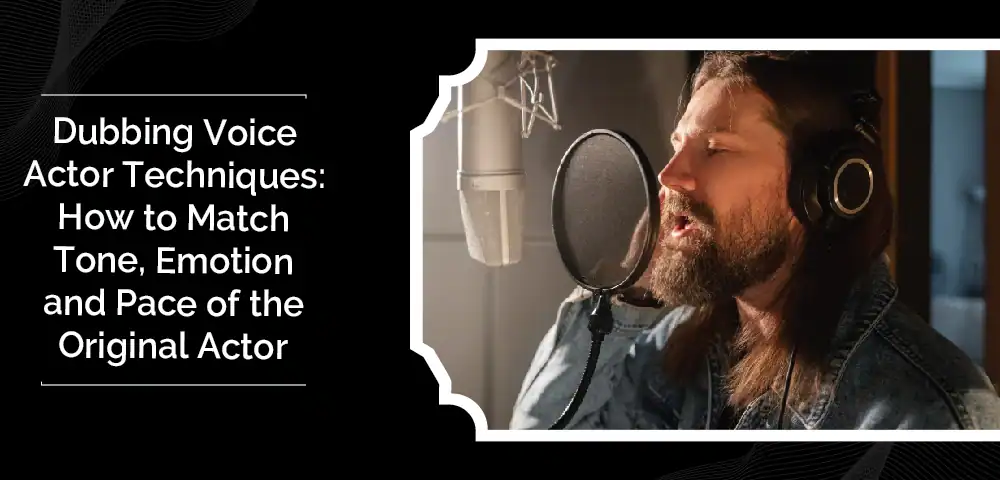
The essence of dubbing is embedded in the voice of the actors, who attempt to convey the personality of the characters through their voice expressions. The actors need to portray emotions like anger, happiness, and sadness, but apart from that, their timing should also match the lip movements for it to be realistic. Dubbing involves consistency in characters, unlike voice-over recording.
Actors study these original performance tracks, mimicking how actors speak, their ticks, and their emotional expressions. Actors perform multiple recordings, capturing pauses, laughter, and high points of emotion.
Under the guidance of the dubbing director, actors manage technical sync while maintaining natural emotional expressions. A single misplaced inflection breaks immersion. Their skill transforms foreign content into familiar voices that audiences embrace completely.
F] Which Professionals Are Involved in Dubbing for Games vs Films?
The dubbing process of the films involves a standard team of artists: translators, directors, actors, and engineers. The emphasis is on linear storytelling with fixed timing for dialogue. The streaming series introduces episode consistency specialists to ensure that all voices sound the same in more than 10 hours of episodes.
Video games need extended teams:
- Branching dialogue writers for player choice situations.
- Motion capture coordinators synchronising voice with character animations
QA testers are checking thousands of audio lines in gameplay paths
Games require 5-10 times more recorded dialogues than movies and responses to player interactions in real time. Such complexity increases the requirements of dubbing professionals substantially.
G] Dubbing Examples That Shaped Global Streaming Success
- Squid Game: The Hindi dub of Squid Game nailed the desperation and sharp dark humour of the series to make it top the rankings in India on Netflix. It attained just the right mix of youthfulness and chilling threat.
- Money Heist: Spanish to multiple languages maintained the traits of the characters, the nervous habits of the professors, and the burning passion of Tokyo in over 100 hours of content. Cultural adaptation ensured that the local reference became universally relatable.
- Narcos: Balanced English-Spanish authenticity while dubbing made Pablo Escobar’s menace universally terrifying.
- The Witcher: The game featured more than 40,000 dubbed lines across languages, maintaining Geralt’s gravelly gravitas consistently.
Conversely, dubbing flows both ways. Netflix India has heavily invested in dubbing Hindi and regional language content into English to capture non-Hindi speaking audiences within India and globally. Recent hits like Ba***ds of Bollywood on Netflix, Made in Heaven on Amazon Prime, and films such as Laal Singh Chaddha, Pushpa 2, and Animal showcase how English dubs preserve the raw energy, cultural quirks, and emotional depth of Indian storytelling, turning regional gems into nationwide sensations.
It all depends on having a fluent rhythm, humour that is appropriate for the culture, unique and believable characters, and an emotional range that aligns with the scene. The above-mentioned examples make clear just how high-quality dubbing can make the world swoon over global hits.
H] Common Challenges in the Dubbing Process and How Studios Handle Them
- Lip-sync limitations: short words stretch unnaturally; studios rewrite for natural phrasing.
- Cultural mismatches: Local idioms replace foreign jokes while preserving humour intent.
- Emotional flatness: Directors coach multiple takes until an authentic feeling emerges.
- Consistency issues: Voice reference libraries ensure characters sound identical across seasons.
Professional studios prevent problems through script analysis, experienced dubbing directors, and rigorous quality control. Pre-recording timing tests and cultural consultants minimise rework, delivering seamless results efficiently.
Conclusion
The dubbing process transforms global content into local favourites through meticulous workflow, specialised dubbing professionals, and passionate voice performances. From script adaptation through final mixing, every step prioritises emotional authenticity and technical precision.
Studios coordinate translators, directors, engineers, and actors to deliver content that feels native. For filmmakers and gaming studios seeking global reach, understanding this pipeline unlocks massive audience expansion. Partner with experienced providers like voice over service in Mumbai for dubbing that preserves creative vision while conquering international markets seamlessly.
Peter Abraham stands as Mumbai’s premier voice-over artist in India. With thousands of projects across advertising, documentaries, and gaming, he delivers authentic voice performances that make global content resonate locally. Ready to elevate your dubbing project with professional voice artistry? Get in touch with me to discuss your specific content localisation needs.

Peter Abraham
Peter Abraham is a versatile voice-over artist based in Mumbai working in the voiceover industry since 2009. With a passion for storytelling and meticulous attention to detail in every project, he brings scripts to life with his captivating voice and professional delivery, exceeding client expectations. Whether it's a commercial or an audiobook, Peter specializes in a wide range of voice-over work, ensuring the highest quality.