How Emotional Intelligence Impacts Modern Voiceover Performance
December 15, 2025
Do Voice-Over Artists Need a Coach? A Clarification Guide
January 7, 2026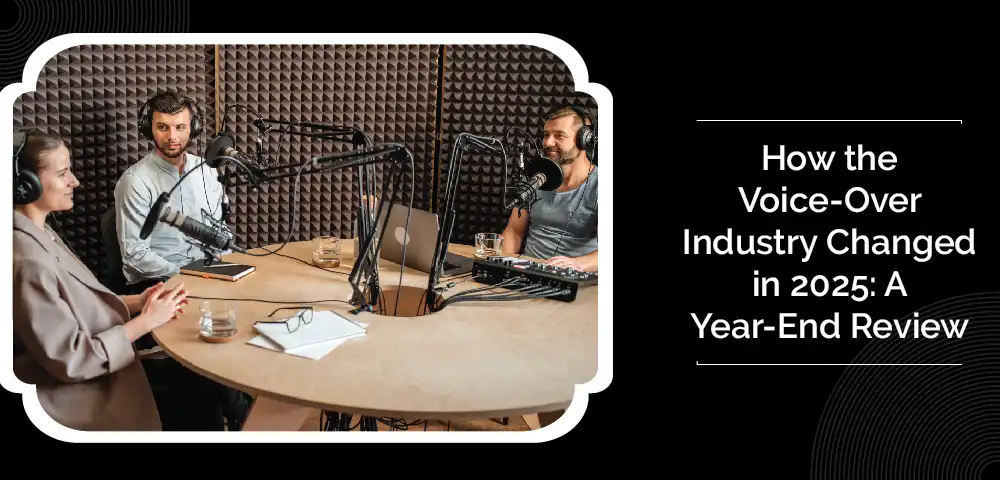
In the year 2025, the voice-over world experienced massive and noticeable changes. It was a year that not only brought minor changes, as many people thought, but it transformed the industry by its very fabric. Because of this, voice actors and studios had to think differently about their work. This year-end review looks at what truly changed, why it happened, and what it means. It also sets the stage for the future of the voice-over industry and how talent can stay ready.
A] Why 2025 Became a Landmark Year for the Voice-Over Industry
The year 2025 became a landmark because many strong trends met at the same time. First, AI and voice tech grew fast and became easier to use for all sizes of clients. Second, global streamers, brands, and apps needed more content than ever before. Third, clients started to value real, warm, human sound instead of old “announcer” reads. Because of this, voice-over industry changes in 2025 were not just about adding new tools. They changed how work is found, priced, and recorded. The voice-over market growth in 2025 was also clear, with more demand for voice-over artists for advertising/commercials and voice-over artists for e-learning in emerging sectors, like games, ads, and e-learning.
The next section shows the key forces that pushed all these shifts and made this year stand out.
B] The Forces Driving This Year of Change
Several core forces drove voice-over industry trends in 2025:
- AI and machine-learning breakthroughs made synthetic voices smoother and more natural.
- Global creative demand rose as brands released more video, audio, and short-form content. Much of this work needed a voice-over artist for explainer videos or a voice-over artist for a podcast for ongoing campaigns.
- Home studio gear became cheaper and better, so more actors built strong setups.
- The need for multilingual content grew, with brands targeting many countries and regions.
- Storytelling taste shifted toward honest, conversational reads that feel human and real.
Together, these forces changed how scripts are written, how casting is done, and how the voice-over technology trends shape daily work.
C] The Biggest Voice-Over Industry Changes in 2025
1. The Rise of Ultra-Realistic AI Voices
One of the biggest shifts was the sharp growth of ultra-realistic AI voice tools. These systems sounded more natural and context-aware. Many clients used them for quick drafts, internal guides, training modules, or lower-risk content.
Also, they were used for e-learning demos, UX prompts, and early cuts of videos. This did not remove humans from the chain. Instead, it changed workflows. Teams could test scripts and timings with AI, then hire human actors for final emotional reads. So, AI changed both the speed and shape of production, not just pure cost.
2. A Talent Shift Toward “Authentic Human Sound”
At the same time, human talent moved strongly toward an “authentic” sound. The old, big announcer style continued to fade. Clients began to demand immediate soft, natural, and emotionally honest performance. They desired reads that did not sound like an advertising crier.
This shift made many actors update their style. They practised subtle emotions, natural tempo, and authentic dialogue. Such a change of preference also allowed humans to be different among the AI voices. It added value to emotional integrity, nuances, and unique character choices.
3. Surge in Global and Multilingual Voice Demand
Another major change was the strong rise in global and local voice needs. Brands wanted regional accents, local phrases, and culture-aware tone. They did not want only one “neutral” track for all markets. Demand grew for Spanish, Hindi, French, Arabic, and various regional voices.
This became one of the main drivers of voice-over market growth in 2025. Talent with more than one language and strong regional accents saw more opportunities. Studios and agencies built larger multilingual rosters.
4. The Evolution of Home Studios to Full Production Environments
Home studios have become more than mere arrangements, as they have been transformed into full production studios. Many voice actors invested in broadcast-level mics, treatment, and software. At the same time, remote tools for directing and live listening have improved. Clients could give notes in real time from any location.
This shifted the way work was planned. Fewer jobs required a physical studio, while more sessions were being conducted from home. Due to this, home setups became central to voice-over technology trends. This also helped small brands and global clients work with talent across borders more easily.
5. Ethical and Contractual Reform Around AI Usage
The biggest ethical shift was about AI and voice cloning. Many artists grew worried about how their voices could be copied or reused. They pushed for clear rules on consent, storage, and data use. This sparked major talks between actors, platforms, and AI firms.
Unions and industry bodies began updating their rules to protect talent. These efforts aimed to ensure clear pay models and fair control. This debate was one of the biggest challenges for voice-over artists in 2025, and it is still in motion. It also set the tone for future laws and contracts.
D] How These Changes Impacted Talent and Career Paths
All these trends forced voice actors to rethink their careers. Many had to upgrade skills, from acting to basic audio engineering. A strong personal brand has also become more important. This meant better demos, clearer niches, and a consistent online presence.
Talent who picked specific lanes, such as games, ads, or e-learning, could stand out more easily. They used these lanes to flow with voice-over industry trends in 2025 and as a guide for focus. The result was a shift from “generalist” profiles to more niche, expert-driven paths.
E] Shifts in Demand Across Major Industries
Demand grew faster in some sectors than others. Gaming and metaverse work expanded and needed more characters and voices. Short-form ads for social media also increased in their frequency, often requiring quick, punchy reads. Corporate e-learning and internal training remained strong. Healthcare and wellness narration increased, while calm and steady voices were very much in demand. More people listened to audiobooks via apps and platforms, driving continued growth in that genre. These areas were at the core of voice-over demand across industries in 2025 and framed how talent planned for their marketing.
F] Challenges That Emerged in 2025
Despite growth, 2025 also brought real pain points. Rate pressure increased, especially from micro-budget jobs and global low-fee offers. Many new beginners entered the field, which led to saturation in some segments. This made it harder for mid-level talent to stand out. Ethical tensions with AI companies also weighed on many actors.
Some feared long-term job security, while others were concerned with the misuse of their voice data. In specific niches, such as general online ads, the competition was increasing. However, the biggest challenges that voice-over artists faced in 2025 pushed many toward quality and specialised skills and forging good relations with clients.
G] Looking Forward: What These Changes Mean for 2026 and Beyond.
The changes of 2025 are not a brief phase. They set the base for a mixed human-plus-AI future. AI will likely grow in support tasks and simple content, while human voices will lead in emotional, high-impact work. Some trends, like multilingual projects and home studios, will keep growing. Others, like legal rules for AI, will keep shifting as new cases arise. For artists, the message is to stay flexible and keep learning. Those who build skills, use smart tools, and protect their rights will adapt well. These predictions for the future of voice-over in 2025 show a future with real risks but also many chances..
Conclusion
The year 2025 changed how voice-over is made, sold, and heard. Tech, client taste, and global demand all moved together. Human voices did not lose their place, but their role became more focused and clear. Talent who grow with these voice-over industry trends in 2025 can still build strong careers. By staying sharp, ethical, and client-focused, voice actors can shape this new era instead of fearing it. The story of 2025 is not the end of human voice work. It is the start of a more hybrid and intentional future.
I, Peter Abraham, a regarded voice-over artist in India, have helped students across India tell their stories in a way that truly resonates with their careers. Enrol in my voice-over acting classes and learn to build your brand along with your voice career. Get in touch to explore custom solutions.

Peter Abraham
Peter Abraham is a versatile voice-over artist based in Mumbai working in the voiceover industry since 2009. With a passion for storytelling and meticulous attention to detail in every project, he brings scripts to life with his captivating voice and professional delivery, exceeding client expectations. Whether it's a commercial or an audiobook, Peter specializes in a wide range of voice-over work, ensuring the highest quality.